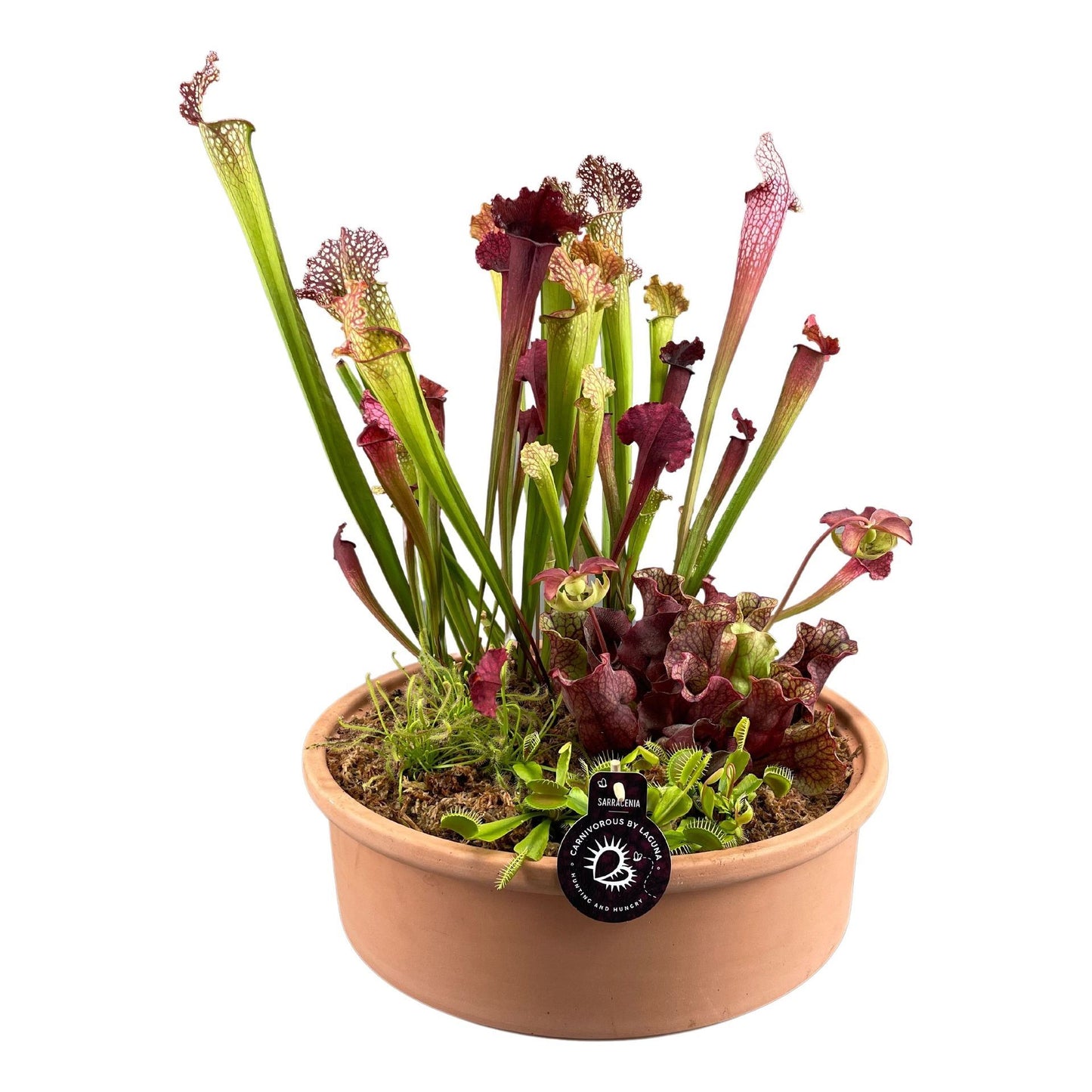


حوض فخار
حوض فخار
Couldn't load pickup availability
carnivorious plants mixed in 40 cm terracotta bowl
Growing a mix of carnivorous plants with different varieties, such as Venus flytrap (Dionaea muscipula), Pitcher Plant (Nepenthes spp.), and Sundew (Drosera spp.), can create a diverse and intriguing carnivorous garden. Here’s a general guide on how to grow these varieties together:
1. Light: Provide bright, indirect light for your carnivorous plants. They often thrive in direct sunlight, but be cautious not to expose them to intense, scorching sunlight for extended periods. A south or west-facing windowsill can be suitable for indoor cultivation.
2. Temperature: Maintain warm temperatures for these plants. Most carnivorous plants prefer daytime temperatures between 70-80°F (21-27°C). Avoid exposing them to temperatures below 50°F (10°C) for extended periods.
3. Humidity: Carnivorous plants generally appreciate high humidity. If the air is dry, increase humidity by misting the plants regularly or placing a tray of water and pebbles nearby.
4. Soil: Use a well-draining, acidic soil mix for carnivorous plants. A typical mix includes sphagnum moss, perlite, and sand. Avoid regular potting soil, as carnivorous plants are adapted to nutrient-poor soils.
5. Watering: Keep the soil consistently moist but not waterlogged. Use purified water, rainwater, or distilled water to avoid mineral buildup.
Venus flytraps benefit from having their pot sit in a tray of water, while others like Nepenthes and Sundews prefer to be watered from the top.
6. Feeding: Allow the plants to catch their own prey. Venus flytraps will close their traps around insects, while Pitcher Plants and Sundews have modified leaves to trap and digest insects.
7. Pot Selection: Choose pots with drainage holes to prevent waterlogging. Consider using hanging baskets for trailing varieties like some Nepenthes.
Separate plants if you’re growing different varieties in the same container to prevent overcrowding.
8. Fertilizing: Avoid fertilizing the soil directly, as carnivorous plants obtain nutrients from captured insects. Using fertilizer can harm them. If insects are scarce, you can occasionally supplement their diet with live insects or insects specifically bred for feeding carnivorous plants.
9. Pruning: Prune any dead or yellowing leaves regularly to maintain the health and appearance of your carnivorous plants.
10. Pest Control: Monitor for pests that may affect carnivorous plants. Aphids, spider mites, or fungus gnats can be problematic. Treat infestations promptly with insecticidal soap or other methods suitable for carnivorous plants.
11. Dormancy: Some carnivorous plants, like Venus flytraps, undergo a dormancy period during the winter. During this time, reduce watering and keep them in a cooler environment.
12. Education: Familiarize yourself with the specific care requirements of each variety. While they share some general needs, individual preferences may vary.
Growing a mix of carnivorous plants can be a fascinating and rewarding experience. Pay attention to each variety’s unique characteristics and provide the appropriate care to create a thriving and diverse carnivorous garden.
Share