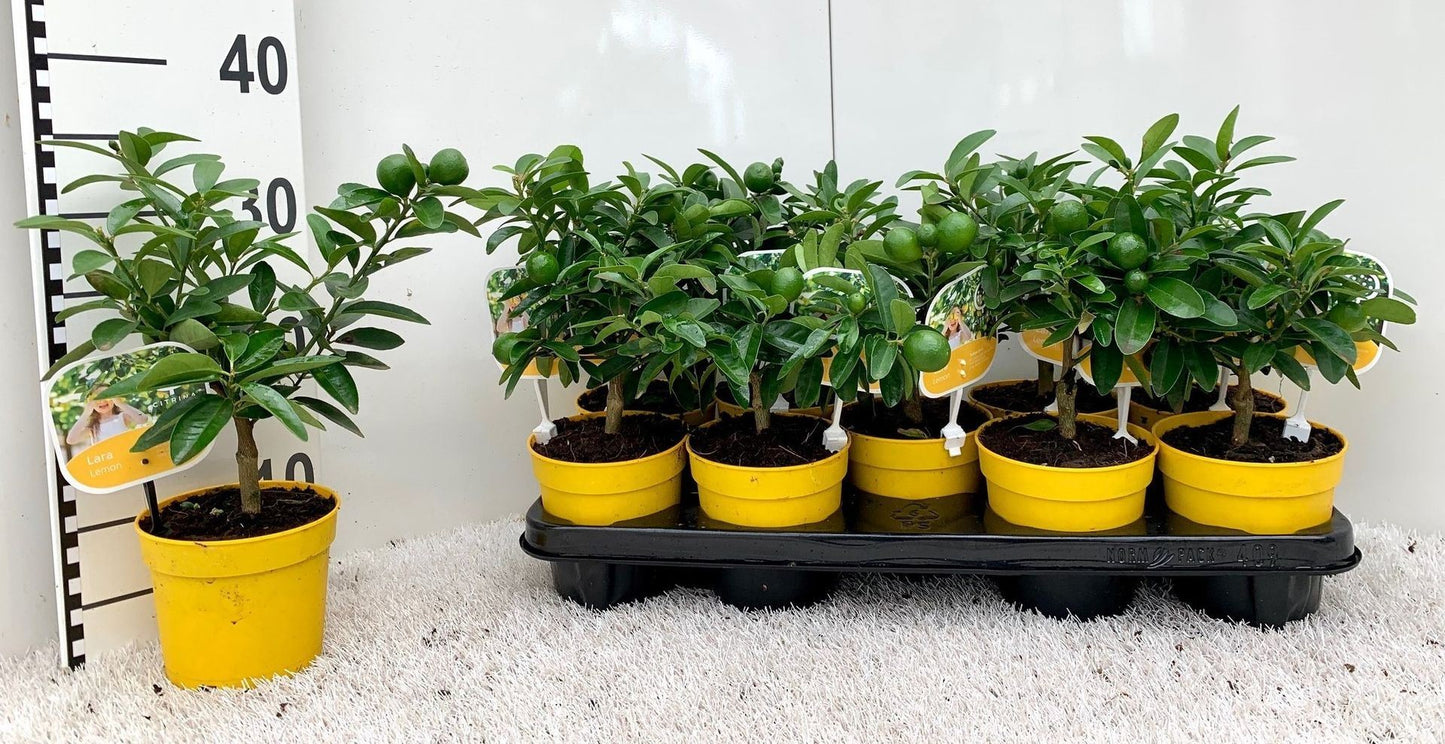


ليموكوات ميني
ليموكوات ميني
Couldn't load pickup availability
Citrus Limequat Limon mini-stem 12cm
Growing Citrofortunella x floridana, commonly known as limequat, involves specific steps to ensure a healthy and productive tree. Limequat is a hybrid citrus fruit that results from crossing the key lime (Citrus aurantiifolia) with the kumquat (Fortunella species). Here’s a guide for growing limequat:
Climate: Limequats thrive in subtropical to tropical climates (zones 9-11). They can also be grown in containers and brought indoors during colder months in regions with frost.
Site Selection: Plant your limequat tree in a location with well-draining soil and full sunlight exposure. They prefer full sun but can tolerate partial shade.
Soil Preparation: Limequats prefer slightly acidic to neutral, well-draining soil. Sandy loam or loamy soil types are suitable. Amend the soil with organic matter if needed.
Planting: Dig a hole slightly larger than the root ball of your limequat tree. Plant the tree at the same depth it was in the container.
Watering: Keep the soil consistently moist, especially during dry periods. Water deeply and allow the top inch of soil to dry out between waterings. Limequats are somewhat drought-tolerant but benefit from regular watering.
Mulching: Apply a layer of organic mulch around the base of the tree to retain moisture, regulate soil temperature, and suppress weeds. Keep the mulch away from the trunk.
Fertilizing: Use a balanced fertilizer formulated for citrus trees. Feed your limequat tree in spring and late summer, following package instructions.
Pruning: Prune to remove dead or crowded branches, shape the tree, and maintain good airflow. Limequat trees can be pruned to maintain a desirable size and shape.
Protection from Cold: Limequats are somewhat cold-tolerant but can be damaged by frost. Provide protection, especially for young trees, during cold snaps.
Pest Control: Keep an eye out for common citrus pests such as aphids, scale insects, or spider mites. Use insecticidal soap or neem oil for organic pest control.
Harvesting: Harvest limequats when they are fully colored. These fruits are small, resembling kumquats, and have a tangy flavor. They can be used in culinary applications and beverages.
Consistent care, proper watering, and attention to soil quality are crucial for the health and productivity of your limequat tree. Like many citrus trees, it may take a few years for the tree to establish and produce a significant harvest.
Share