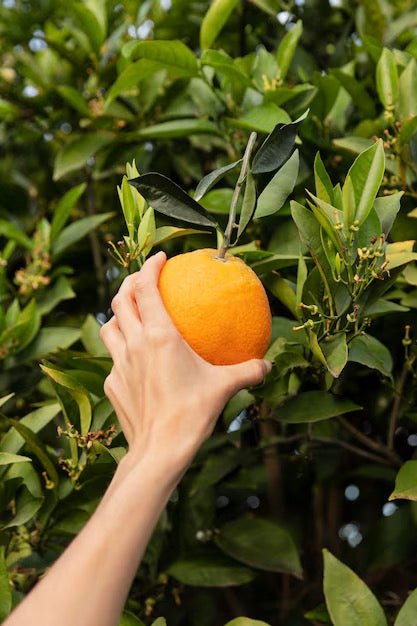


برتقال حلو
برتقال حلو
Couldn't load pickup availability
Citrofortunella x microcarpa orange
Citrofortunella x microcarpa, commonly known as Calamondin or calamansi, is a citrus fruit tree that produces small, sour oranges. Here are guidelines on how to grow Citrofortunella x microcarpa:
Materials You’ll Need:
• Calamondin sapling or seeds
• Suitable location (sunny and well-draining)
• Well-draining soil
• Mulch
• Fertilizer formulated for citrus trees
• Watering can or hose
• Pruning shears (for maintenance)
Steps for Growing Citrofortunella x microcarpa (Calamondin):
1. Select a Location: Choose a sunny location with well-draining soil for your Calamondin tree. It thrives in full sun but can tolerate some partial shade.
2. Planting: If you’re starting from a sapling, plant it in a hole that’s about the same depth as the root ball but twice as wide. Space multiple trees at least 6 feet apart.
3. Soil Preparation: Calamondins prefer well-draining, slightly acidic to neutral soil (pH 6.0 to 7.0). Amend the soil with organic matter, like compost, if needed.
4. Mulch: Mulch the area around the tree to retain soil moisture, regulate temperature, and suppress weeds. Keep the mulch a few inches away from the trunk to prevent rot.
5. Watering: Keep the soil consistently moist, especially during dry periods. Water when the top inch of soil feels dry. Calamondins like regular watering but don’t tolerate waterlogged conditions.
6. Fertilization: Feed your Calamondin with a balanced fertilizer formulated for citrus trees. Apply fertilizer in spring and summer according to the package instructions.
7. Pruning and Maintenance: Prune your Calamondin to shape it, remove dead or crowded branches, and improve air circulation. Regular pruning can also help control the size of the tree.
8. Pest and Disease Management: Keep an eye out for common citrus pests such as aphids and scale insects. Treat with insecticidal soap or neem oil if necessary. Watch for signs of citrus diseases and address them promptly.
9. Harvesting: Harvest Calamondins when they are fully colored and ripe. They can be used for culinary purposes, as juice, or as ornamental fruits.
10. Protection: Protect your tree from cold temperatures, especially if you’re growing it in a region with occasional frost. Consider covering the tree or moving it indoors during cold spells.
Growing Calamondin is relatively straightforward, and it’s a versatile citrus tree suitable for both ornamental and culinary purposes. Adjust care practices based on your specific local conditions and consult with local experts for tailored advice.
Share