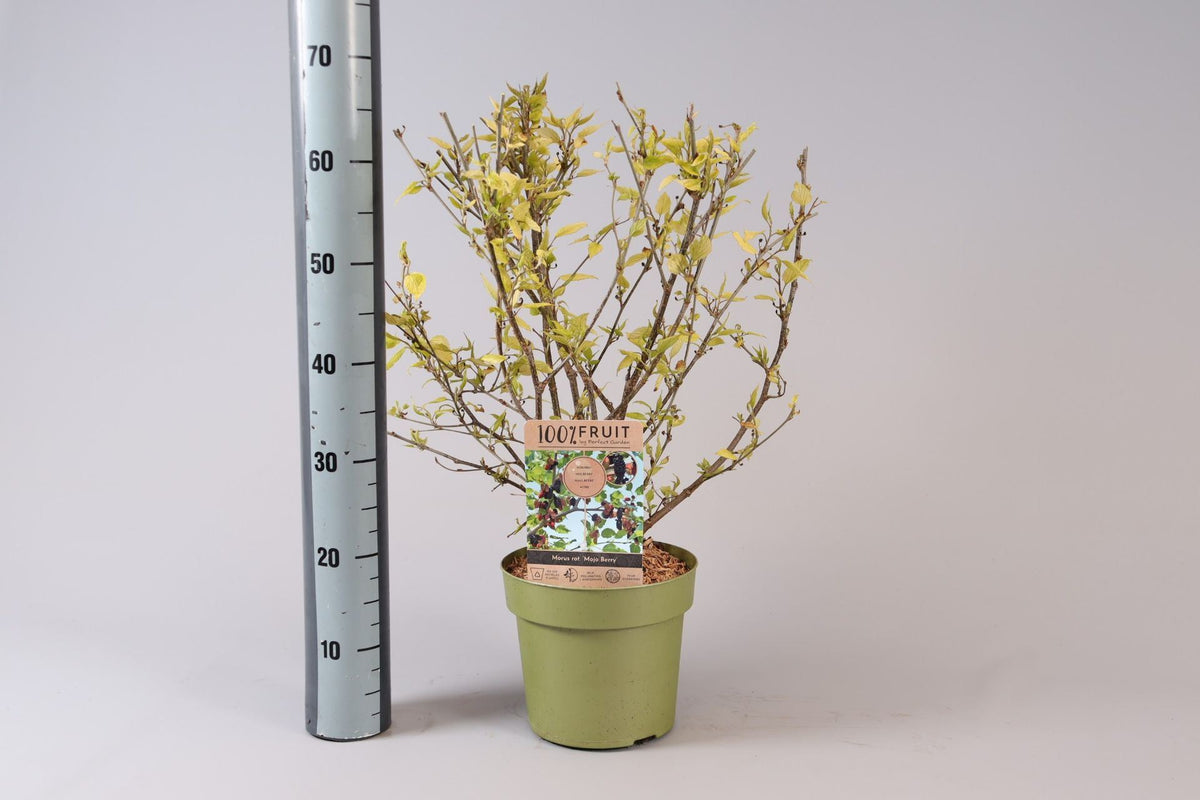
Morus alba 100% Fruit 21cm توت
Morus alba 100% Fruit 21cm توت
Couldn't load pickup availability
Morus Mojo Berry 100% Fruit
Growing Morus ‘Mojo Berry,’ a unique variety of mulberry, involves providing the right conditions for these deciduous fruit-bearing trees. Here’s a guide to help you grow Mojo Berry successfully:
1. Site Selection: Choose a location with full sunlight for your Mojo Berry tree. Mulberries can tolerate a variety of soil types but prefer well-draining soil.
2. Soil Preparation: Ensure the soil is well-draining and slightly acidic to neutral (pH 6.0 to 6.5).
Incorporate organic matter, such as compost, into the soil to improve fertility.
3. Planting: Plant Mojo Berry trees in the late fall or early spring when they are dormant. Space multiple trees at least 15 to 20 feet apart to allow for proper growth and air circulation.
4. Watering: Mojo Berry trees benefit from regular watering, especially during dry spells.
Water the tree deeply when the top inch of soil feels dry.
5. Fertilizing: Fertilize young Mojo Berry trees with a balanced fertilizer in spring, before new growth starts. Mature trees typically don’t require heavy feeding.
6. Pruning: Prune Mojo Berry trees to shape them and remove dead or crowded branches. Mulberries can be pruned to a single trunk or allowed to grow as a multi-stemmed tree.
7. Support: Young trees may need staking for support until they are well-established.
8. Mulching: Apply a layer of mulch around the base of the tree to conserve moisture, suppress weeds, and regulate soil temperature.
9. Harvesting: Harvest ripe Mojo Berries when they are plump and have a deep purple color. Mojo Berries are known for their sweet and tangy flavor.
Be gentle when harvesting to avoid damaging the branches.
10. Pest and Disease Control: Mojo Berry trees are relatively resistant to pests and diseases, but keep an eye out for issues like aphids or caterpillars.
Treat pests promptly with insecticidal soap or neem oil.
11. Propagation: Propagate Mojo Berry through cuttings or root division. Keep in mind that seeds may not produce true to the parent tree.
12. Winter Care: Mojo Berry trees are generally hardy, but in colder climates, you may want to protect young trees during harsh winters with burlap wraps or other insulation methods.
Remember to tailor your care routine based on your local climate conditions and the specific characteristics of Mojo Berry. Regular monitoring and timely care will contribute to a healthy and productive tree.
Share