
1
/
of
1
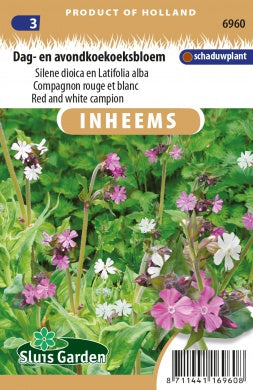
Silene Red and White campion
Silene Red and White campion
Regular price
1.350 KWD
Regular price
Sale price
1.350 KWD
Unit price
/
per
Shipping calculated at checkout.
Couldn't load pickup availability
*Silene dioica*, commonly known as Red Campion, and *Silene latifolia*, commonly known as White Campion, are closely related plants that produce attractive red and white flowers, respectively. Here's a guide on how to grow Red and White Campion:
**1. Planting Time:**
- Both Red and White Campion can be grown from seeds. Sow the seeds directly in the garden in the fall or early spring.
**2. Location:**
- Choose a location with full sun to partial shade. Campion plants are adaptable and can tolerate different light conditions.
**3. Soil Preparation:**
- Prepare well-draining soil. Campion plants can tolerate various soil types but prefer moderately fertile soil. Incorporate organic matter, such as compost, to improve soil structure and fertility.
**4. Planting Seeds:**
- Sow the seeds on the soil surface and lightly press them into the soil. Water the area well after planting.
**5. Watering:**
- Keep the soil consistently moist during the germination period. Once established, Campion plants are relatively drought-tolerant. Water during dry spells to encourage healthy growth.
**6. Mulching:**
- Apply a thin layer of mulch around the plants to help retain soil moisture and suppress weeds. Avoid heavy mulching directly over the plants to allow them to receive adequate sunlight.
**7. Growth Habit:**
- Red and White Campion can grow to a height of 1 to 3 feet, creating a bushy appearance. Provide sufficient spacing between plants to accommodate their mature size.
**8. Pruning:**
- While Campion plants don't require extensive pruning, you may choose to deadhead spent flowers to encourage continuous blooming. However, leaving some seed heads can provide interest in the garden.
**9. Self-Seeding:**
- Both Red and White Campion are known to self-seed readily. If you want to control their spread, deadhead the flowers before they produce seeds.
**10. Deer Resistance:**
- Campion plants are often resistant to deer browsing, making them good choices in areas where deer are a concern.
**11. Winter Care:**
- Red and White Campion are generally hardy and can withstand winter temperatures. In colder climates, they may die back in winter and regrow in the spring.
**12. Wildlife Attraction:**
- The flowers of Red and White Campion attract pollinators, including bees and butterflies. The seed heads provide food for birds.
Red and White Campion add a splash of color to the garden and are suitable for naturalized or cottage garden settings. Keep in mind their potential for self-seeding, and adjust your care routine based on your specific growing conditions.
**1. Planting Time:**
- Both Red and White Campion can be grown from seeds. Sow the seeds directly in the garden in the fall or early spring.
**2. Location:**
- Choose a location with full sun to partial shade. Campion plants are adaptable and can tolerate different light conditions.
**3. Soil Preparation:**
- Prepare well-draining soil. Campion plants can tolerate various soil types but prefer moderately fertile soil. Incorporate organic matter, such as compost, to improve soil structure and fertility.
**4. Planting Seeds:**
- Sow the seeds on the soil surface and lightly press them into the soil. Water the area well after planting.
**5. Watering:**
- Keep the soil consistently moist during the germination period. Once established, Campion plants are relatively drought-tolerant. Water during dry spells to encourage healthy growth.
**6. Mulching:**
- Apply a thin layer of mulch around the plants to help retain soil moisture and suppress weeds. Avoid heavy mulching directly over the plants to allow them to receive adequate sunlight.
**7. Growth Habit:**
- Red and White Campion can grow to a height of 1 to 3 feet, creating a bushy appearance. Provide sufficient spacing between plants to accommodate their mature size.
**8. Pruning:**
- While Campion plants don't require extensive pruning, you may choose to deadhead spent flowers to encourage continuous blooming. However, leaving some seed heads can provide interest in the garden.
**9. Self-Seeding:**
- Both Red and White Campion are known to self-seed readily. If you want to control their spread, deadhead the flowers before they produce seeds.
**10. Deer Resistance:**
- Campion plants are often resistant to deer browsing, making them good choices in areas where deer are a concern.
**11. Winter Care:**
- Red and White Campion are generally hardy and can withstand winter temperatures. In colder climates, they may die back in winter and regrow in the spring.
**12. Wildlife Attraction:**
- The flowers of Red and White Campion attract pollinators, including bees and butterflies. The seed heads provide food for birds.
Red and White Campion add a splash of color to the garden and are suitable for naturalized or cottage garden settings. Keep in mind their potential for self-seeding, and adjust your care routine based on your specific growing conditions.
Share