1
/
of
3
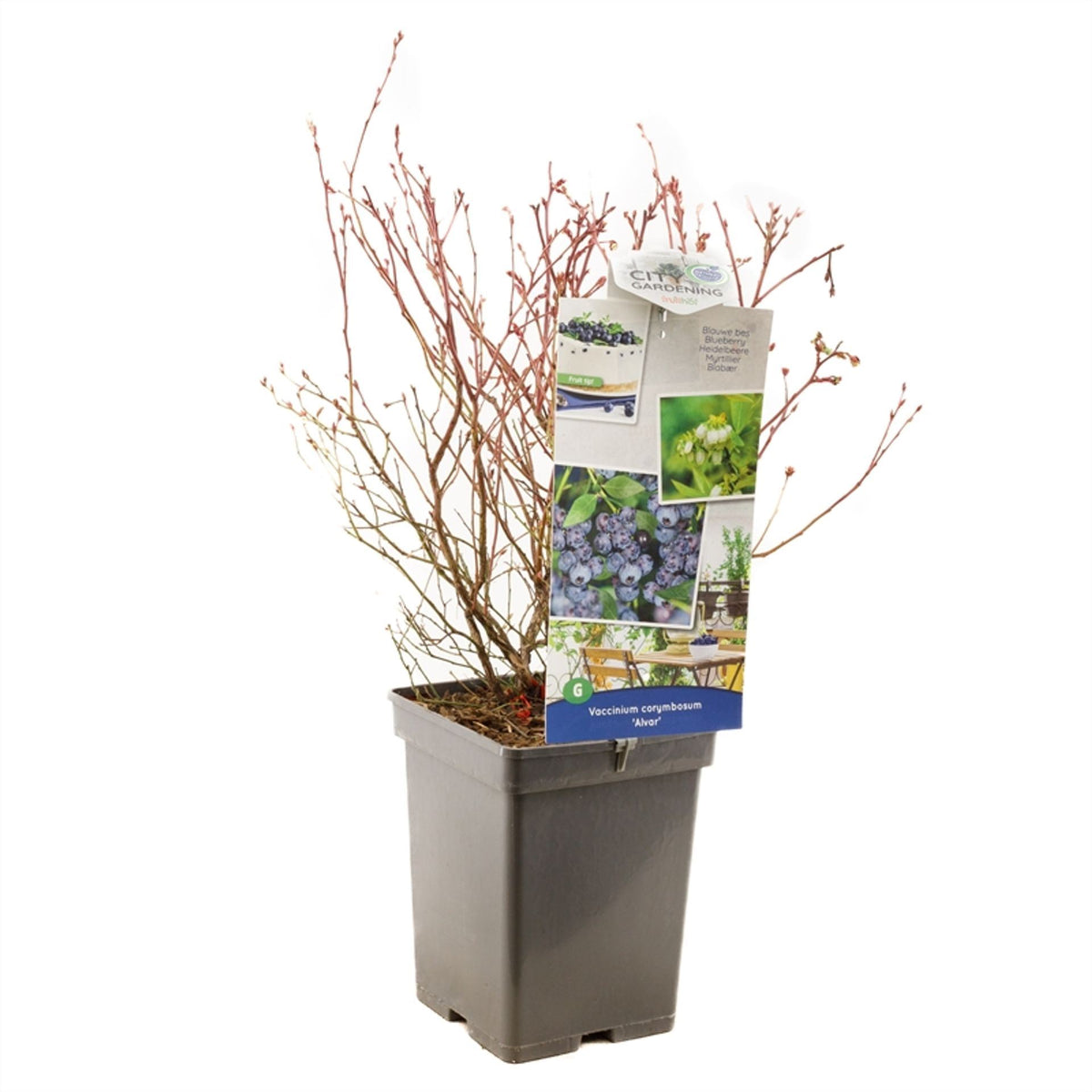
بلوبيري Alvar Compacte blauwe bes
بلوبيري Alvar Compacte blauwe bes
Regular price
18.500 KWD
Regular price
Sale price
18.500 KWD
Unit price
/
per
Shipping calculated at checkout.
Couldn't load pickup availability
Growing Vaccinium corymbosum 'Alvar', a compact variety of highbush blueberry, involves ensuring the plant has the proper growing conditions and care to produce healthy berries. Here’s a detailed guide to help you grow Alvar Compact Blueberries successfully:
1. Planting Location
- Sunlight: Blueberries require full sun for optimal fruit production. Choose a location that receives at least 6-8 hours of sunlight daily. However, partial shade can be tolerated in hotter climates, though it may reduce fruit yield.
- Soil: Blueberries thrive in acidic, well-drained soil with a pH of 4.5 to 5.5. You can amend the soil with peat moss, pine needles, or sulfur to lower the pH if necessary. Good soil drainage is crucial, as blueberries are susceptible to root rot in poorly drained soils.
- Moisture: The soil should be consistently moist but not waterlogged. Adequate drainage is essential to prevent waterlogged roots.
2. Planting Time
- Early spring or late fall are the best times to plant blueberries. Planting when the plant is dormant helps the root system establish before the growing season.
3. Planting Procedure
- Spacing: Even though 'Alvar' is a compact variety, space plants about 1 meter (3 feet) apart to allow for proper air circulation and healthy growth.
- Hole Preparation: Dig a hole twice as wide and just as deep as the root ball. This helps the roots spread easily in their new location.
- Planting Depth: Place the plant in the hole at the same depth it was growing in its container. Ensure the root ball is covered with soil but do not bury the stem or crown too deeply.
- Watering: After planting, water thoroughly to help settle the soil around the roots.
4. Watering & Mulching
- Watering: Blueberries need consistent moisture, especially during the first growing season. Water deeply and regularly, especially during dry spells. Ensure the soil stays moist but not waterlogged. Watering needs are about 2.5–5 cm (1–2 inches) per week.
- Mulching: Apply a 3-5 cm (1-2 inch) layer of organic mulch such as pine needles, wood chips, or pine bark around the base of the plant. Mulch helps retain moisture, regulates soil temperature, suppresses weeds, and maintains soil acidity.
5. Fertilization
- Blueberries require acid-loving fertilizers, such as those designed for azaleas or rhododendrons. Apply a balanced fertilizer with a slow-release formulation in early spring, and again after flowering.
- Avoid over-fertilizing, as blueberries are sensitive to excess nitrogen, which can damage the roots and reduce fruit production. Organic options like compost or aged manure can also be used, but avoid materials that could raise soil pH.
6. Pruning
- Young Plants (First 1-2 Years): Minimal pruning is needed during the first couple of years. Focus on removing weak or damaged branches to encourage a strong framework.
- Mature Plants: After 2-3 years, start pruning annually in late winter or early spring before new growth begins. Remove dead or weak branches and thin out older, non-productive canes (canes older than 3 years). This promotes the growth of new, vigorous shoots, increases airflow, and enhances fruit production.
7. Pollination
- ‘Alvar’ is generally self-pollinating, but planting another blueberry variety nearby can enhance cross-pollination and increase fruit yield. Cross-pollination will also produce larger berries.
8. Pests & Diseases
- Common Pests: Blueberries can attract birds, aphids, and spotted wing drosophila. To protect ripening fruit from birds, use bird netting. Organic insecticides or insecticidal soaps can help manage pest infestations.
- Common Diseases: Watch for fungal diseases such as powdery mildew, root rot, and botrytis. Good air circulation and proper spacing help prevent these problems. Avoid overhead watering to reduce the risk of fungal diseases.
9. Harvesting
- Blueberries ripen in mid to late summer. The berries are ready to harvest when they turn deep blue and detach easily with a gentle pull. Allow the berries to stay on the bush for a few days after they turn blue to maximize sweetness.
- Harvest regularly over a period of several weeks as the berries ripen gradually.
10. Winter Care
- ‘Alvar’ is generally hardy, but protecting the plant during extreme winters can help prevent damage. Apply a thicker layer of mulch around the base in late autumn to insulate the roots.
- For colder climates, consider covering the plants with a frost cloth to protect them from frost damage.
By following these care guidelines, you’ll be able to cultivate a healthy and productive Vaccinium corymbosum 'Alvar' plant, providing you with delicious blueberries in season.
Share