1
/
of
3
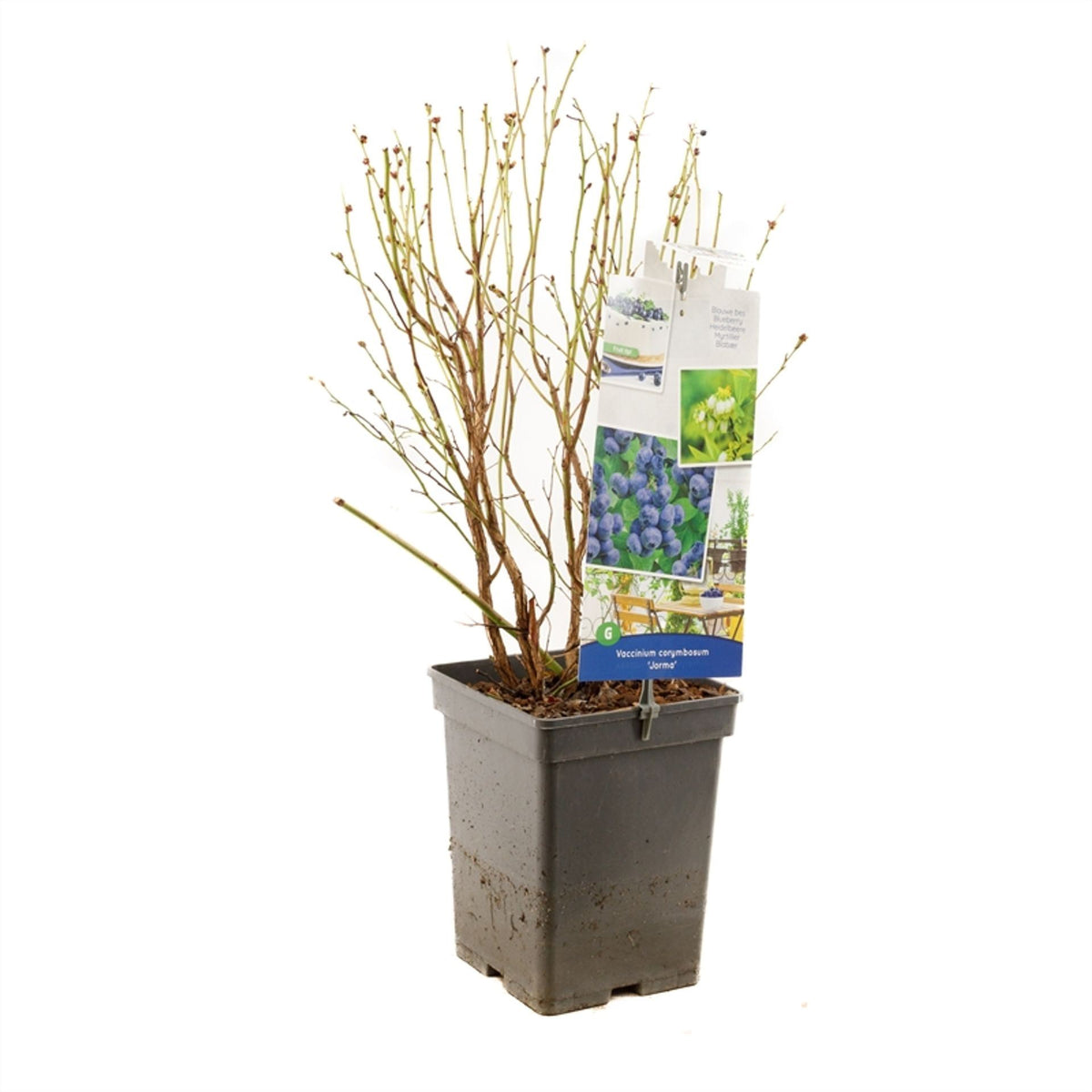
بلوبيري Jorma Compacte blauwe bes
بلوبيري Jorma Compacte blauwe bes
Regular price
18.500 KWD
Regular price
Sale price
18.500 KWD
Unit price
/
per
Shipping calculated at checkout.
Couldn't load pickup availability
Growing Vaccinium corymbosum 'Jorma', a compact variety of highbush blueberry, requires proper care and specific growing conditions to ensure healthy plants and abundant fruit. Here’s a guide to help you successfully grow Jorma Compact Blueberries:
1. Planting Location
- Sunlight: Blueberries need full sun for optimal fruiting. Choose a location that receives at least 6-8 hours of sunlight daily. Partial shade may be tolerated, but fruit production will decrease.
- Soil: Blueberries require acidic, well-drained soil. The ideal soil pH is 4.5 to 5.5. You can lower soil pH by adding sulfur, peat moss, or pine needles. Blueberries are sensitive to alkaline soils, so testing your soil pH before planting is recommended.
- Moisture: Ensure that the soil is consistently moist but not waterlogged. Proper drainage is essential, as blueberries don’t tolerate standing water or soggy conditions.
2. Planting Time
- Plant Jorma in early spring or late fall when the plant is dormant. Spring planting gives the plant time to establish roots before the growing season, while fall planting helps the plant settle in before winter dormancy.
3. Planting Procedure
- Spacing: Even though 'Jorma' is a compact variety, allow at least 1–1.2 meters (3-4 feet) between plants to promote good air circulation and growth.
- Hole Preparation: Dig a hole that is twice the width of the root ball and just as deep. This will give the roots enough space to spread out comfortably.
- Planting Depth: Place the plant in the hole so that the root ball is level with or slightly above the surrounding soil. Avoid burying the crown (where the stem meets the roots) too deeply.
- Watering: Water thoroughly after planting to help the soil settle and eliminate air pockets around the roots.
4. Watering & Mulching
- Watering: Blueberries need consistent moisture, particularly during the first year of establishment. Water deeply and regularly, especially during dry spells, aiming for about 2.5–5 cm (1-2 inches) of water per week.
- Mulching: Apply a layer of organic mulch, such as pine bark, pine needles, or wood chips, around the base of the plant. Mulch helps to maintain soil moisture, regulate temperature, suppress weeds, and keep soil acidity. Keep mulch about 5-7 cm thick but avoid piling it directly against the stem.
5. Fertilization
- Acid-Loving Fertilizer: Use a fertilizer formulated for acid-loving plants, such as those made for azaleas or rhododendrons. Apply fertilizer in early spring and again after the first harvest to support growth.
- Avoid fertilizers high in nitrogen, as too much nitrogen can cause excessive leafy growth and fewer fruits. A balanced fertilizer like 10-10-10 is often recommended.
- Organic options like compost or aged manure are also suitable but should be applied carefully to maintain soil pH.
6. Pruning
- Young Plants (1-2 years): Focus on minimal pruning during the first couple of years to allow the plant to establish. Remove any dead or weak branches and ensure a strong plant structure.
- Mature Plants: Once the plant is 3 years old or older, prune annually in late winter or early spring before new growth starts. Remove old, dead, or weak canes and thin out dense growth to improve air circulation and sunlight penetration.
- Renewal Pruning: To encourage new, productive growth, remove the oldest canes every 3-4 years.
7. Pollination
- 'Jorma' is self-pollinating, but planting it near other varieties of blueberries can increase cross-pollination and result in larger, more abundant berries. It’s always beneficial to have multiple blueberry plants for higher yields.
8. Pests & Diseases
- Pests: Common pests include birds, aphids, and spotted wing drosophila. Protect ripening fruit from birds by using bird netting, and treat pest infestations with organic insecticidal soap if necessary.
- Diseases: Blueberries can suffer from diseases like powdery mildew, root rot, and botrytis (gray mold). Ensure proper spacing between plants for good air circulation and avoid wetting the foliage when watering. Well-drained soil and mulching help reduce the risk of fungal diseases.
9. Harvesting
- Ripening Time: Blueberries typically ripen from mid to late summer, depending on your climate. The berries are ripe when they turn deep blue and detach easily with a gentle pull.
- Harvest Regularly: Blueberries ripen gradually, so harvest them over several weeks. Leaving the berries on the bush for a few extra days after they turn blue will enhance their sweetness.
10. Winter Care
- Cold Protection: 'Jorma' is hardy but may benefit from some protection in extremely cold climates. Apply a thick layer of mulch (about 10 cm) around the base of the plant to insulate the roots during winter.
- Frost Cloth: If frost is forecast, especially for young plants, consider covering them with a frost cloth to prevent frost damage.
By following these steps, your Vaccinium corymbosum 'Jorma' should thrive, producing delicious blueberries for many years. Regular care, especially in maintaining soil acidity and moisture, will ensure the plant's health and productivity.
Share