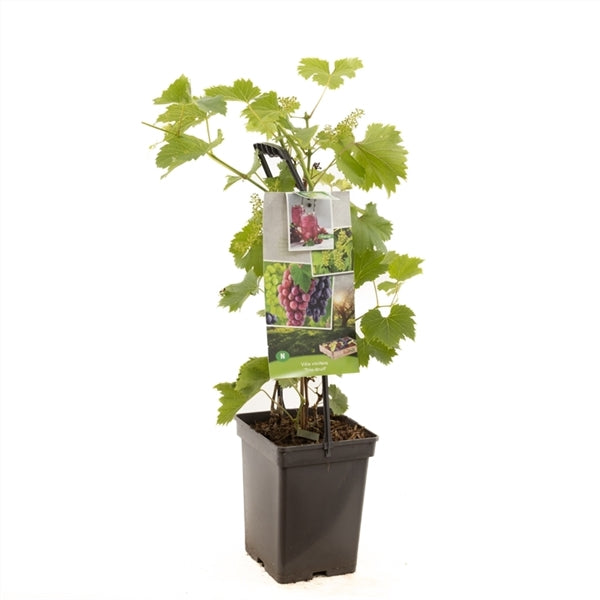
عنب ثلالث الوان trio
عنب ثلالث الوان trio
Couldn't load pickup availability
Vitis vinifera Trio druif - draagbeugel
Growing Vitis vinifera ‘Trio Druif,’ a variety of grapevine, can be a rewarding experience, especially if you’re interested in cultivating your own grapes. Here’s a guide on how to grow this specific grapevine:
Materials You’ll Need:
• Vitis vinifera ‘Trio Druif’ grapevine plant
• Suitable location (sunny and well-draining)
• Trellis or support system
• Well-draining soil
• Mulch
• Fertilizer for fruit-bearing plants
• Watering can or hose
• Pruning shears (for maintenance)
Steps for Growing Vitis vinifera ‘Trio Druif’ (Grapevine):
1. Select a Location: Choose a sunny location for your grapevine, as grapes thrive in full sun. Ensure there’s good air circulation to prevent fungal diseases.
2. Planting: Plant your grapevine in well-draining soil. The soil should be amended with organic matter, like compost, to improve fertility and drainage. Plant the vine at the base of a trellis or support system.
3. Support System: Install a trellis or support system for the grapevine. This provides structural support for the vines as they grow and makes it easier to manage the plant.
4. Soil Preparation: Grapes prefer slightly acidic to neutral soil (pH 6.0-7.0). Ensure the soil is well-draining to prevent waterlogging, which can harm the roots.
5. Mulch: Apply a layer of mulch around the base of the grapevine to conserve soil moisture, regulate temperature, and suppress weeds. Keep the mulch a few inches away from the trunk.
6. Watering: Keep the soil consistently moist, especially during dry periods. Water deeply when the top inch of soil feels dry. Adequate water is crucial for grape development.
7. Fertilization: Feed your grapevine with a balanced fertilizer formulated for fruit-bearing plants. Apply fertilizer in spring and early summer according to the package instructions.
8. Pruning: Prune your grapevine in late winter or early spring before new growth begins. Pruning helps control the size, shape, and yield of the vine. Remove old wood and shape the plant to encourage air circulation.
9. Pest and Disease Management: Keep an eye out for common grape pests like aphids, leafhoppers, and grape berry moths. Treat with appropriate pesticides if necessary. Monitor for diseases such as powdery mildew and downy mildew.
10. Harvesting: Grapes are typically ready for harvest in late summer to early fall, depending on the specific variety. Harvest when the grapes are fully colored, plump, and have a sweet taste.
Growing Vitis vinifera ‘Trio Druif’ requires attention to pruning, support, and pest management. Adjust care practices based on your local conditions, and consult with local experts for advice tailored to your region.
Share